Fintech
Inside HL Hunt’s AI negotiator: how the collections platform builds payment plans on the fly
HL Hunt Financial says its AI Debt Collection product does more than send reminders — it negotiates. The company’s product page details an automated four-step recovery flow that ends with an AI-generated menu of payment plans for every past-due account.
HL Hunt Financial, which has built a suite of AI-driven lending and credit-repair tools, markets its AI Debt Collection product as a system that goes beyond automated reminders to actively negotiate with debtors. According to the company’s own product page at hlhunt.org, the platform runs past-due accounts through a four-step pipeline: creditors upload accounts via CSV, API, or a direct loan-origination-system integration; the AI then scores each account’s collectability and picks a contact strategy; automated outreach follows across multiple channels on what the company calls a "smart schedule"; and finally the system handles collection, payment tracking, and reporting back to the creditor.
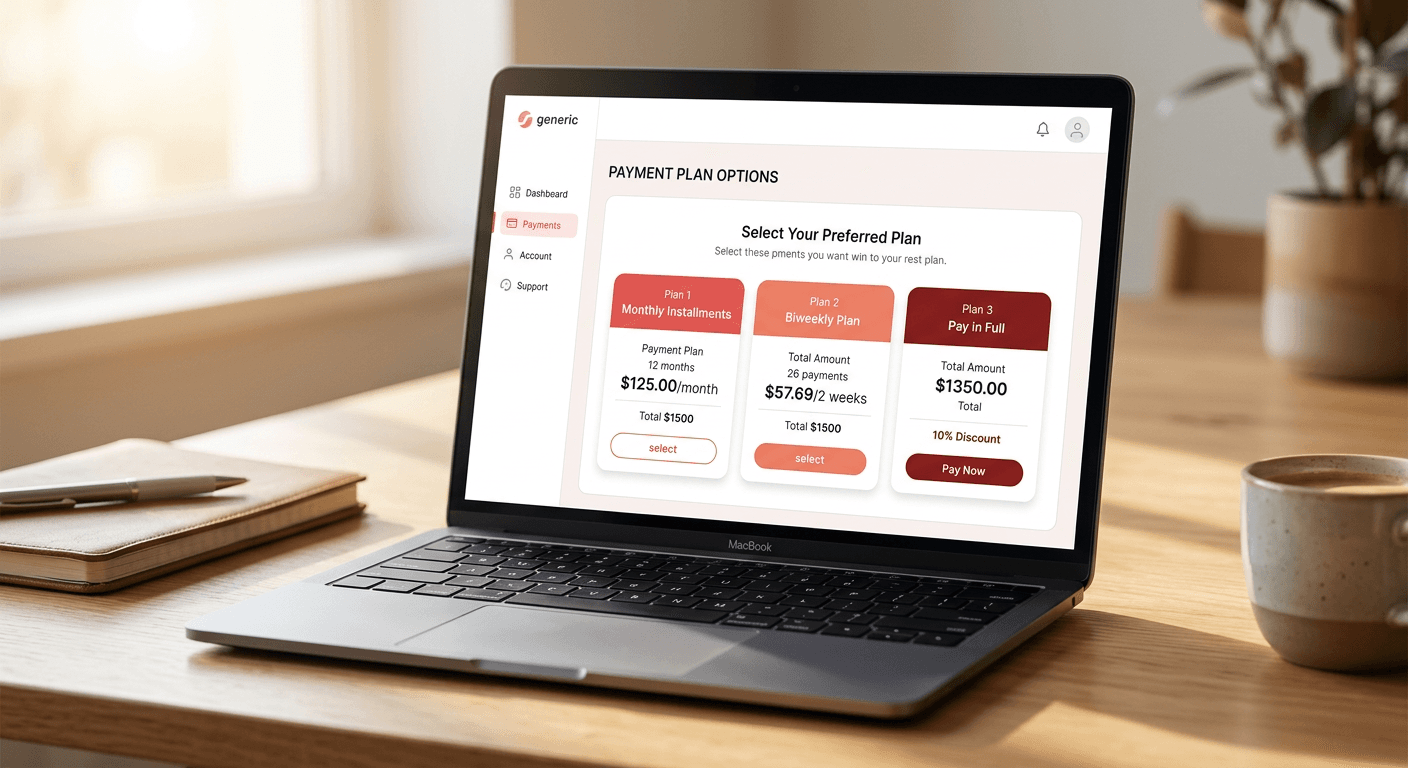
The negotiation piece is illustrated on the product page with a sample account showing three AI-generated payment options presented to a debtor: a $95-per-month plan spread across twelve autopay installments, a $180-per-month plan over six autopay installments — labeled the "AI Pick" — and a lump-sum payoff of $1,026 with a stated 5% discount for paying in full immediately. HL Hunt describes this as the AI offering "personalized payment plans based on what each debtor can realistically afford," with the goal of increasing the share of accounts that reach resolution rather than aging further into delinquency.
Contact sequencing is handled through what the company calls an escalation waterfall: a gentle reminder is followed by a firmer notice, then a phone call, then a letter, with the AI determining timing at each stage. That outreach runs across five channels — SMS, email, phone calls, physical letters, and voicemail drops — which HL Hunt says are all coordinated through a single compliance engine rather than handled separately by different systems or staff.
On compliance, HL Hunt states that every contact attempt is checked in real time against the Fair Debt Collection Practices Act, the Telephone Consumer Protection Act, and Regulation F, including automatic enforcement of the so-called "7-in-7" contact-frequency rule and time-of-day restrictions that vary by state and time zone. The company also says its system immediately flags any account after a cease-and-desist request. HL Hunt’s marketing materials claim zero compliance violations to date and a 38% higher recovery rate than what it describes as the collections industry average, alongside a claimed 60% reduction in agent time spent per account. None of these figures are independently audited or verified by Wall Street Ledger.
The product is priced on a commission basis that HL Hunt says declines as usage scales, ranging from 26% of recovered balances on its free tier down to 3% on its top Enterprise tier, with flat monthly platform fees layered on top at the higher tiers. This spotlight follows an earlier September 11, 2026 Wall Street Ledger piece on the same product that focused on its pricing structure and skip-tracing claims; this piece instead examines the payment-negotiation and escalation mechanics as described by the company.
Company material cited
- HL Hunt Financial, AI Debt Collection product page (hlhunt.org) — Four-step recovery workflow, sample payment-plan figures, escalation waterfall description, multi-channel outreach claims, and compliance-engine claims (FDCPA/TCPA/Reg F, 7-in-7 rule, cease-and-desist handling); all claims are the company’s own and unverified