Fintech
From $495 a month to unlimited: how HL Hunt prices AI underwriting across 55-plus credit products
Two prior pieces on this site covered HL Hunt’s Hunt Score decisioning and its custom-model builder. A return visit to the product page surfaces the three-tier pricing structure and the company’s own comparison table pitting its AI against bureau scores and manual underwriting.
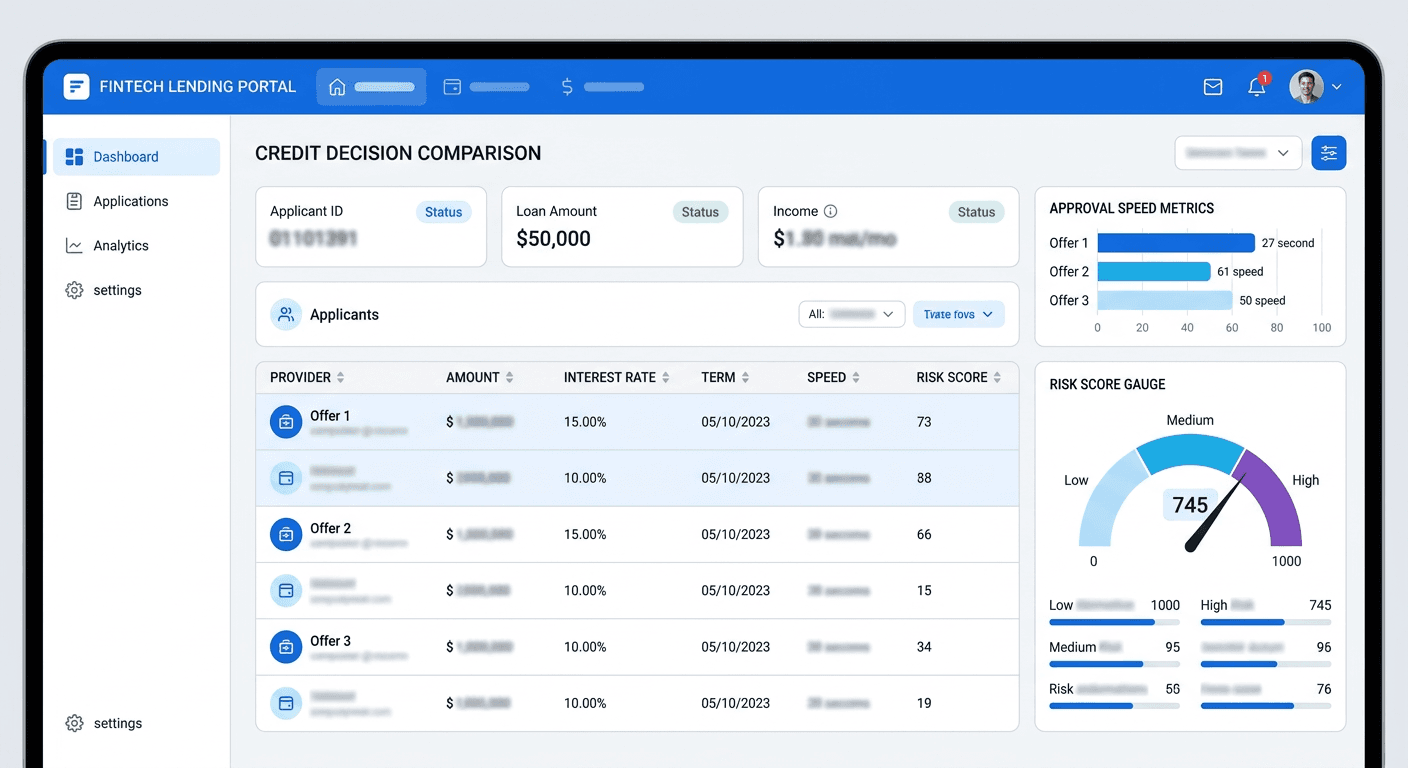
HL Hunt Financial’s AI Underwriting product — also marketed under the Hunt Score name — has had two spotlights on this site already: an August 28 piece on its decisioning mechanics and sub-signal breakdown, and a September 16 piece on its custom-model builder for lenders with non-standard products. A return to the product page this week surfaces the commercial side of the offering that those two pieces didn’t cover: how HL Hunt prices the product, and how it positions itself against the underwriting methods it says it replaces.
The pricing structure runs in three tiers. Starter, at $495 per month plus $2.50 per underwriting assignment, caps out at 100 assignments monthly and is limited to individual-applicant underwriting with basic reporting and a single team seat. Professional, at $1,495 per month plus $1.75 per assignment, adds business underwriting, custom risk models, a collections dashboard and support for up to five team members, with a monthly cap of 1,000 assignments. Enterprise, at $4,995 per month plus $0.95 per assignment, removes the assignment cap entirely and adds SOC 2 compliance reporting, SSO/SAML authentication and 24/7 phone support. As with the company’s other published pricing pages, these figures are HL Hunt’s own list prices; the site does not disclose actual contract terms, discounts or customer counts at each tier.
The page also runs a comparison table pitting "HL Hunt AI" against "FICO / Bureau" and "Manual UW" across seven capabilities. HL Hunt claims sub-250-millisecond decisions against bureau-only scoring (which the table describes as producing "a score only, no decision") and 24-to-72-hour manual underwriting. It also claims it can approve "thin-file" applicants who lack enough bureau history to generate a traditional score, by substituting alternative data such as bank-transaction history, rent payments and utility records — a claim consistent with the broader alternative-data pitch covered in this site’s earlier Hunt Score piece, but one that, as before, is not independently verified here.
Beyond pricing and positioning, the page lists the product as spanning more than 55 underwriting use cases, organized under "Individuals" (loans and credit, insurance, and employment/income products like earned wage access and gig-worker onboarding) and "Businesses" (lending, payments and commerce, insurance, and industry-specific categories like construction and logistics financing). For lenders whose product doesn’t fit any listed category, the page offers a "Build it" option — the custom-model generator this site covered in more detail on September 16 — which HL Hunt says can produce an application form, document requirements, verification steps and a risk model from a plain-language description "in minutes." None of the underlying approval-rate, default-rate or speed figures referenced on the page are accompanied by an independent audit or named customer case study.
Company material cited
- HL Hunt AI Underwriting product page, hlhunt.org, accessed October 2026 — Pricing tiers, comparison table, product catalog and custom-model feature description; all figures are company-supplied and unverified