Fintech
HL Hunt’s HLX wants to sell stocks, crypto, forex, options and futures from one login — and let an AI agent trade all of it
The pre-launch platform’s pitch hinges on three preset AI agents with simulated annual returns as high as 91%, and a single account spanning asset classes that normally require separate broker-dealer, forex and futures licenses.
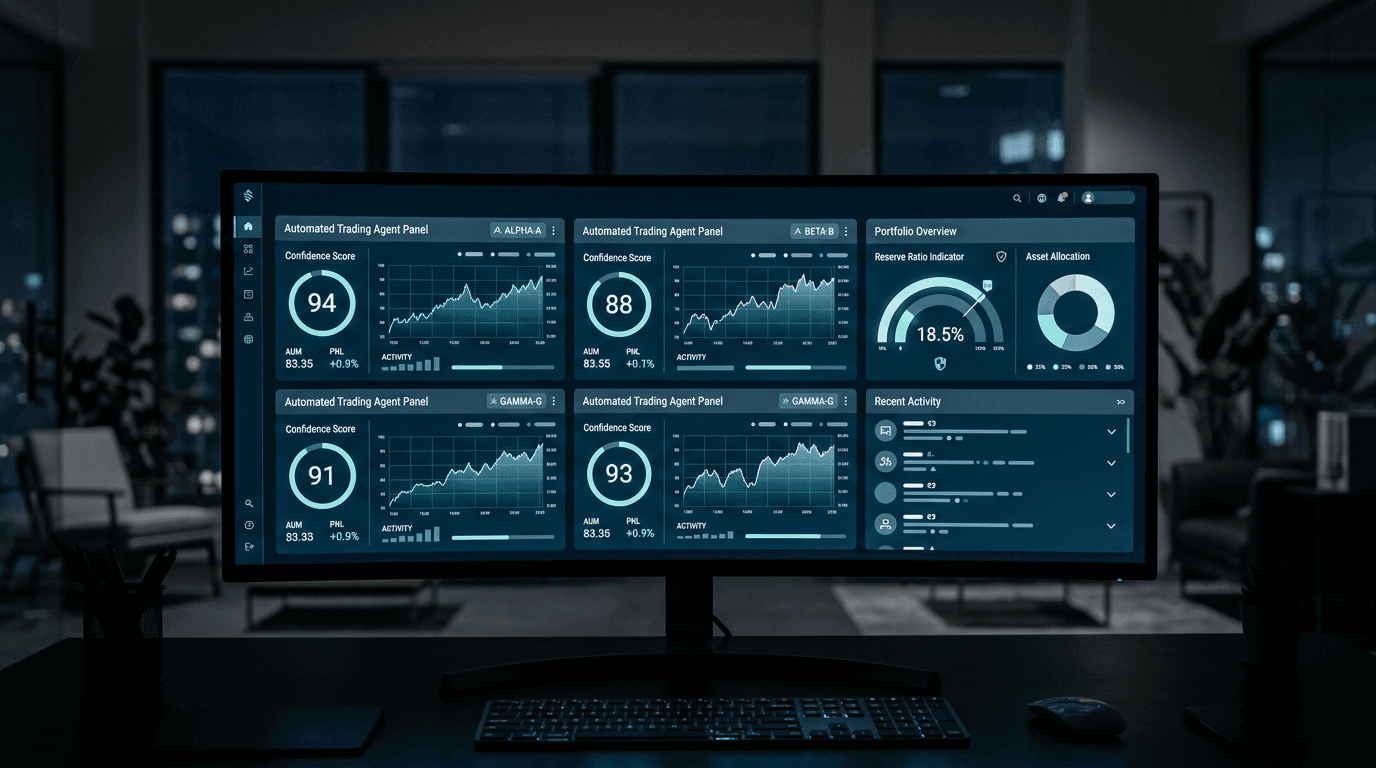
HL Hunt Financial’s HLX Trading page makes two bets simultaneously: that traders want a single account spanning nearly every major asset class, and that many of them would rather hand trading decisions to a preset AI agent than place trades themselves. Both claims remain unverifiable in the most important sense — HLX has not launched, and every figure on the page describes a plan or a backtest rather than a live product.
The asset-class breadth is the more structurally ambitious claim. HL Hunt’s page lists stocks, crypto, forex, options, commodities, ETFs, stablecoins and futures as available from one account. In most jurisdictions, offering that combination legitimately requires separate licensing: a broker-dealer registration for equities and options, distinct authorization for retail forex, and commodity or futures trading authorization from a derivatives regulator, on top of whatever money-transmission or virtual-asset licensing applies to crypto and stablecoin custody. HL Hunt’s marketing page does not specify which regulator or regulators will oversee HLX, or whether the full asset-class list will be available at launch versus added later — a detail that matters more for a multi-asset broker than for a single-product fintech app.
On the AI side, HL Hunt previews three preset "agents" with sharply different risk profiles and backtested returns: Sentinel, described as a low-risk, dollar-cost-averaging and hedging strategy, shown with a backtested annual return of +18.4%; Momentum, a trend-following strategy at +42.7%; and Apex, a multi-strategy approach spanning futures and options, shown at +91.2%. Each figure is paired with a maximum historical drawdown, and HL Hunt states plainly that "backtested performance is simulated and not a guarantee of future results." That disclaimer is appropriate and standard for any preset trading strategy, but it also means the headline return numbers — particularly Apex’s 91.2% — describe a backtest built with the benefit of hindsight, not a track record any customer has actually experienced.
A separate "Recent AI Signals" feed on the page shows a sample 74.2% win rate for individual trade signals generated from what HL Hunt describes as technical, sentiment and volume analysis. As with the agent backtests, this figure is presented as illustrative of how the signal feed is meant to look once live, not as a disclosed, audited performance statistic covering a defined sample of real trades.
Taken together, HLX’s pitch is unusually broad for a product that is still gated behind a waitlist: a multi-license asset lineup, three AI agents with double-digit-to-triple-digit backtested returns, and a signal feed with a specific win rate — all description and simulation rather than operating history. Prospective users drawn to the breadth or the AI agents should treat the return figures as hypothetical until HLX launches, ask directly which licenses cover which asset classes before funding an account, and confirm that any live agent performance is reported against the same backtested benchmarks HL Hunt is currently advertising, not a different or more favorable comparison.
Company material cited
- HL Hunt HLX — AI Trading Platform page — Multi-asset trading claims, preset AI agent names and backtested returns (Sentinel, Momentum, Apex), signal feed win-rate example, and simulated-results disclaimer