Fintech
HL Hunt’s pitch to lenders: Metro 2 reporting without the Metro 2 expertise
The company’s own comparison table pits its AI-driven Metro 2 Software against manual spreadsheet formatting and legacy reporting platforms, promising minutes of setup instead of weeks and built-in dispute handling instead of a separate module.
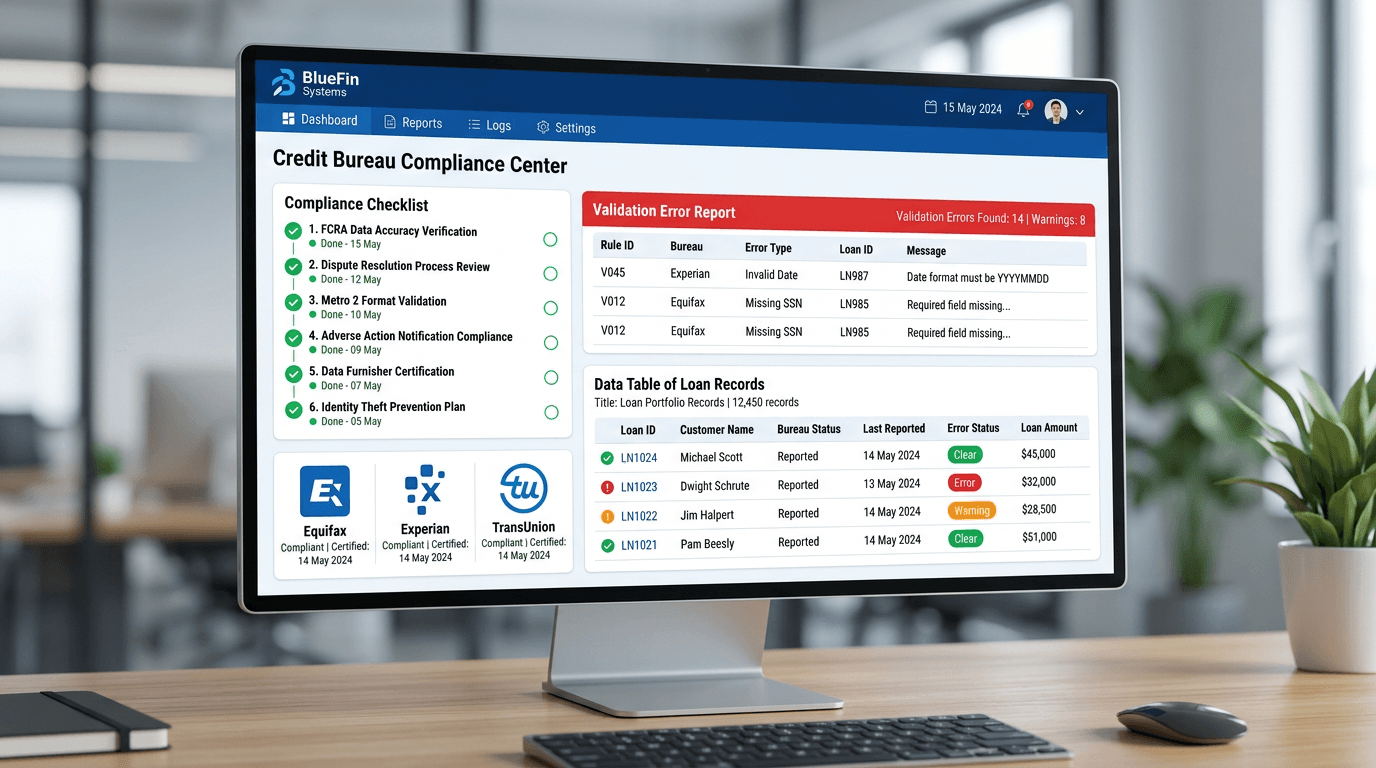
HL Hunt Financial’s Metro 2 Software — the AI tool that converts raw loan data into bureau-ready files for Equifax, Experian and TransUnion — has appeared on this site before, focused on its conversion speed and pricing tiers. The company’s product page also makes its pitch more directly, with a side-by-side comparison table stacking its own platform against two alternatives every reporting lender already knows: doing it manually in a spreadsheet, or paying for legacy Metro 2 software.
The table, labelled “Why HL Hunt AI vs the old way,” runs down six dimensions. On conversion method, HL Hunt claims AI auto-mapping against manual field-by-field work or a legacy platform’s rigid, template-based column mapping. On setup time, it claims minutes versus weeks to learn the Metro 2 spec from scratch, or days to weeks to configure legacy software. On required expertise, HL Hunt says none is needed because the AI handles the specification, versus expert-level knowledge for manual formatting or moderate template knowledge for legacy tools.
Error handling is where HL Hunt leans hardest on its automation pitch: the company says its platform runs loan data against more than 200 validation rules with AI-suggested one-click fixes before a file ever reaches a bureau, compared to a manual process that — per HL Hunt’s framing — only discovers errors when a bureau rejects the submission, or legacy software that offers “basic checks only.” Dispute management follows a similar contrast: HL Hunt bundles ACDV (Automated Consumer Dispute Verification) handling into its core workflow, while the company describes legacy platforms as requiring a separate module for the same function.
On cost, the comparison is stark by design: HL Hunt’s tiers start at $99 a month for up to 500 tradelines with no setup fees or contracts, scaling to $299 for 5,000 tradelines with REST API access and dispute management, and a custom Enterprise tier for unlimited volume with dedicated onboarding and 24/7 SLA support. Against that, HL Hunt’s own table pegs legacy Metro 2 software at $500 to $2,000 a month plus setup fees — the same $500-to-$2,000 figure the company has cited elsewhere on the page as the cost of the incumbent alternative it’s trying to displace.
HL Hunt says the platform is built for any lender that reports tradelines to the bureaus, from banks and credit unions replacing legacy mainframe reporting to API-first fintech lenders, auto and BHPH lenders, mortgage servicers, credit card issuers, personal loan lenders, credit builders, and SaaS platforms that want to white-label bureau reporting for their own lending clients. That breadth is central to the company’s bet: a single AI mapping engine serving very different tradeline types — revolving credit, installment loans, auto leases, mortgage modifications — rather than a bespoke integration per loan category.
As with the rest of HL Hunt’s comparison claims, the table is the company’s own framing of its competitors, not an independently benchmarked test against a specific named legacy vendor or a documented manual-process failure rate. The underlying accuracy and speed figures — 99.9% validation accuracy and sub-five-second conversion, cited elsewhere on the product page — are likewise unverified marketing claims. Lenders weighing a switch should still request a trial run against their own tradeline mix and confirm CDIA and FCRA data-furnishing compliance directly rather than relying on the comparison table alone.
Company material cited
- HL Hunt Metro 2 Software page — Comparison-table claims (conversion method, setup time, error detection, dispute management, API access, pricing) versus manual formatting and legacy software