Fintech
SellFi’s flat-fee pricing and seven target verticals, from Rolex dealers to real estate
HL Hunt’s pre-launch seller-financing platform charges by portfolio size rather than a cut of deal volume, and pitches itself to watch dealers, private auto sellers and owner-financed real estate alike.
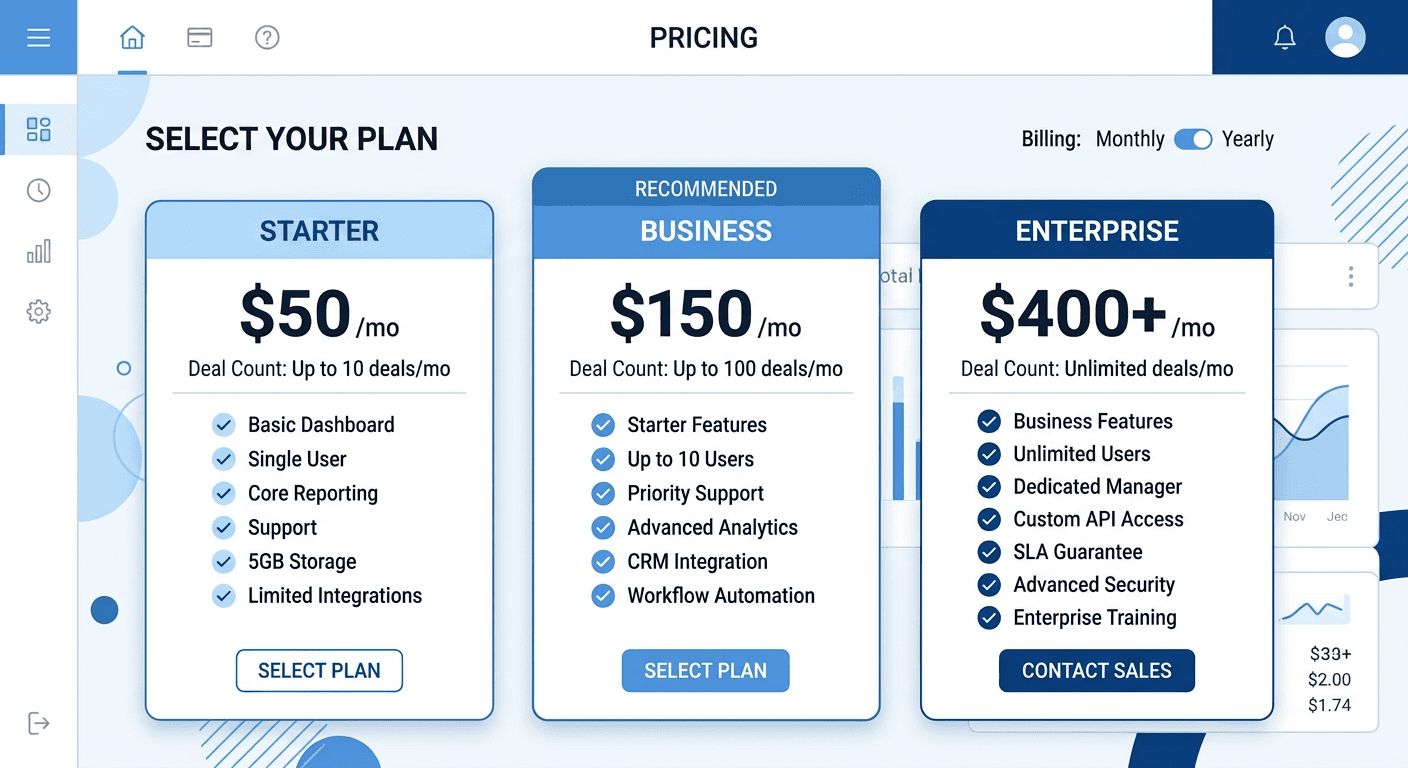
HL Hunt’s SellFi has been covered on this site before as a waitlisted concept and, separately, through the sample Rolex-financing deal the company uses to illustrate its dashboard. This piece looks instead at two details that determine who the product is actually built for: how it prices itself, and which categories of sellers it names explicitly. As with every prior mention, the starting caveat still applies — SellFi has not launched, and HL Hunt’s own site states that “all figures presented are forward-looking estimates” for “a product the company has not yet launched.”
The pricing structure is a flat monthly subscription keyed to how many financing deals a seller has active at once, not a percentage of the money being financed. The Starter tier is listed at $29 a month for up to 10 active deals and includes deal creation, auto-collection, contract generation and payment reminders. The Business tier, marked “Most Popular,” is $79 a month for up to 50 active deals and adds late-fee automation, credit-bureau reporting and one-click handoff to HL Hunt’s debt-collection product. An Enterprise tier is priced on request for unlimited deals and adds a white-label portal, API access and a dedicated account manager. All three remain marked “Coming Soon.”
HL Hunt names seven categories of seller it is building the product for: watch and jewelry dealers (described as able to finance a Rolex, AP or Cartier directly and earn interest on the full retail price), private auto sellers, real-estate owner-financing, electronics and tech resellers, equipment financing for contractors and studios, furniture and home-goods retailers, and service businesses such as contractors, dentists and veterinarians financing large invoices. The watch/jewelry and private-auto categories are each flagged “Popular” on the page itself.
Two of those verticals get features the generic workflow does not. Private auto sales are paired with “built-in title lien tracking and payment management,” a detail relevant because a seller financing a vehicle typically needs to hold the lien until the loan is paid off — a legal mechanic distinct from unsecured financing on, say, a laptop. Real estate is paired with “amortization and escrow built in,” acknowledging that owner-financed property deals commonly require an escrow arrangement for taxes and insurance that a simple payment schedule would not cover. Whether SellFi’s implementation of either feature will satisfy state-specific titling and escrow requirements once live is, again, unverified — the product has not launched and these remain feature descriptions rather than tested functionality.
The bureau-reporting detail is worth flagging on its own: reporting a buyer’s on-time payments to Equifax, Experian and TransUnion through HL Hunt’s Metro 2 integration is bundled starting at the $79/mo Business tier, not included in the $29 Starter plan. A seller on the cheapest tier who wants that incentive for buyers would need to upgrade. HL Hunt frames all of this as a seller-financing tool that keeps 100% of the interest in the seller’s pocket with “no bank required” — a pitch that is coherent on paper but, like the rest of SellFi, unconfirmed by any live transaction, independent review or regulatory filing as of this writing.
Company material cited
- HL Hunt SellFi (Seller Financing Software) page — Pricing tiers, target verticals, vertical-specific features, and forward-looking-estimate disclaimer